
Fiddle Leaf Fig Care Guide
Ficus lyrata
Also called Banjo fig, Ficus lyrata
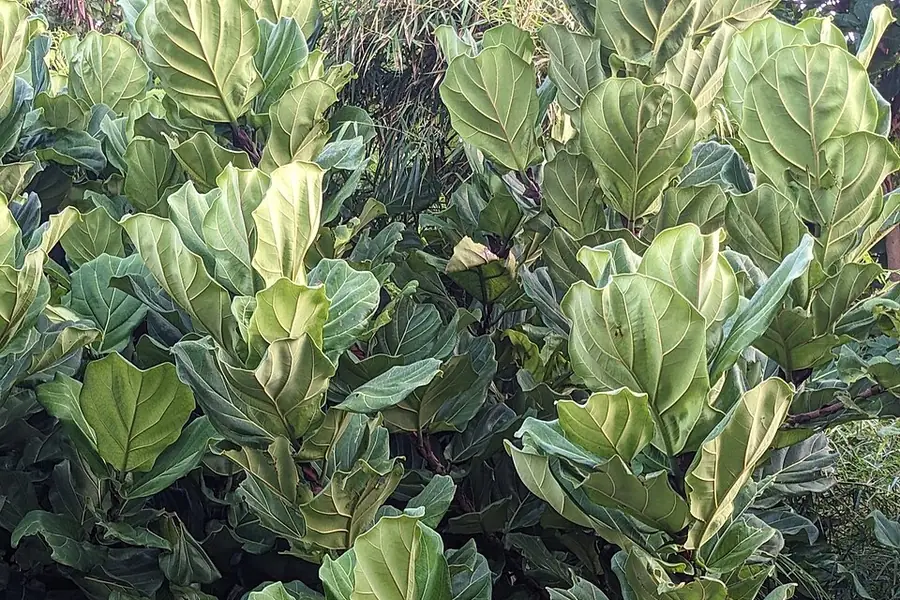
Photo Eric Knight · CC BY 4.0 via Wikimedia Commons
- Family
- Moraceae
- Native to
- Lowland tropical rainforest of western Africa
- Mature size
- 6-10 ft tall indoors as a tree or bush
- Toxicity
- Milky sap irritates skin and causes mouth irritation, drooling and vomiting in cats and dogs. Wear gloves when pruning.
Fiddle Leaf Fig care at a glance
Light
Bright, some direct sun
The brightest spot you have, ideally within a few feet of an east or south window. This is a high-light plant frequently sold as a low-light one.
How to measure light at homeWater
Every 7-10 days
Water thoroughly when the top 2 inches dry out, then let it drain completely. Consistency matters more to a fiddle leaf fig than to almost any other houseplant.
How to water houseplants properlyHumidity
40-60%
Appreciates moderate humidity. Very dry winter air contributes to brown, crispy leaf edges.
Temperature
65-75°F (18-24°C)
Hates change. Keep it away from radiators, air-conditioning vents and doors that open to cold air, because sudden swings cause leaf drop.
Soil
Well-draining indoor mix
Quality potting soil with 20-30% perlite or bark. It needs moisture retention but must never stay saturated.
Fertiliser
Monthly, spring to early autumn
A high-nitrogen feed (such as 3-1-2) at half strength encourages the large leaves this plant is grown for.
Repotting
Every 2-3 years
Go up only one pot size. Fiddle leaf figs sulk after repotting, so do it in spring and expect a month of no new growth.
How to repot a houseplantPropagation
Stem cuttings or air layering
Take a cutting with 1-2 leaves and root in water for 6-10 weeks. Air layering is more reliable for thick, woody stems.
The fiddle leaf fig has a reputation for being difficult, and it is partly earned. It is not fragile so much as specific: it wants a lot of light, consistent watering, and to be left alone in one place. Meet those three conditions and it is straightforward. Miss them and it complains loudly, in brown spots.
Reading brown spots correctly
This is the single most useful skill for keeping a fiddle leaf fig alive, because the two main causes need opposite treatments.
| What you see | Where it appears | Cause | What to do |
|---|---|---|---|
| Dark brown, sometimes with yellow halo | Centre and base of leaf, lower leaves first | Root rot from overwatering | Inspect roots, remove rotted material, water less |
| Dry, crispy, tan | Edges and tips, spreading inward | Underwatering, low humidity | Water more thoroughly, raise humidity |
| Pale, bleached, papery | Leaves facing the window | Sunburn | Filter direct afternoon sun |
| Small dark spots with yellow rings | Scattered anywhere | Bacterial or fungal leaf spot | Remove affected leaves, improve airflow, avoid wetting foliage |
If you take one thing from this guide: dark spots from the middle mean too much water; crispy edges mean too little.
Light
Fiddle leaf figs come from the understorey and canopy edges of West African rainforest, where light is bright and abundant. Indoors they need the brightest spot you have.
- Best: 2-5 ft from an east-facing window, with gentle direct morning sun
- Good: near a south or west window, filtered through a sheer curtain
- Marginal: north window with clear sky view
- Not enough: interior walls, corners, anywhere more than 8 ft from a window
Rotate the plant a quarter turn every week or two. They lean toward light noticeably, and rotating keeps growth even.
Watering rhythm
Consistency is the theme. Pick a day, check the soil, and water only if the top two inches are dry.
When you water, water fully, pouring slowly until water runs freely from the drainage holes, which ensures the entire root ball is wetted. Then let it drain completely. Never leave the pot standing in a full saucer.
A useful trick is bottom-watering once a month: stand the pot in a few inches of water for 20-30 minutes so the soil draws moisture up evenly, then drain. This prevents the dry pockets that form when water channels down the sides of a root-bound pot.
Stability matters more than you think
Fiddle leaf figs drop leaves in response to change. Common triggers:
- Moving the plant between rooms
- A door or window that lets in cold winter air
- A radiator or heating vent switching on for the season
- Air-conditioning blowing directly on the foliage
- Repotting
Choose the position carefully once, then leave it. A plant that drops a few leaves after a move is not dying. It is adjusting, and it will stop once conditions hold steady for a few weeks.
Pruning and shaping
Left alone, a fiddle leaf fig grows as a single tall stem with leaves only near the top. To get the branched, tree-like shape:
Pruning. In spring, cut the main stem just above a node, removing 6-12 inches. Within a few weeks two or three new branches usually emerge below the cut. Use clean shears and wear gloves, because the milky sap irritates skin.
Notching. If you do not want to lose height, cut a shallow wedge about a third of the way into the trunk, just above a node. This interrupts the hormone flow that suppresses side branching and often triggers a new branch at that point.
Feeding and repotting
Feed monthly from spring to early autumn with a high-nitrogen fertiliser at half strength. Nitrogen drives the large leaf growth this plant is grown for.
Repot every two to three years in spring, moving up just one pot size. Expect the plant to pause for a month afterwards. That is normal, not a problem. In years when you do not repot, scrape off the top two inches of soil and replace it with fresh mix.
Fiddle Leaf Fig problems and fixes
| Symptom | Likely cause | What to do |
|---|---|---|
| Dark brown spots starting at the leaf centre or base, often with a yellow halo | Root rot from overwatering | Check the roots. Cut away soft brown roots, repot into fresh well-draining mix, and water less frequently. Full guide → |
| Brown, dry, crispy patches at leaf edges and tips | Underwatering or very dry air | Water more thoroughly, until it runs from the drainage holes, and raise humidity to around 50%. Full guide → |
| Leaves dropping suddenly, often still green | Environmental shock, such as a move, a draft or a temperature swing | Pick one good spot and leave the plant there. Fiddle leaf figs drop leaves in protest at change and recover once conditions stabilise. |
| Pale, bleached patches on the leaves facing the window | Sunburn from unfiltered direct sun | Filter harsh afternoon light with a sheer curtain, and rotate the plant a quarter turn weekly. |
| Tall bare trunk with leaves only at the top | Natural growth habit plus insufficient light lower down | Notch the trunk or prune the top to force branching. Pruning above a node in spring reliably triggers two or three new branches. |
Fiddle Leaf Fig FAQs
How often should I water a fiddle leaf fig?
Roughly every 7-10 days in spring and summer, and every 10-14 days in winter, watering thoroughly when the top 2 inches of soil are dry. Fiddle leaf figs respond badly to erratic watering, so checking the soil on the same day each week and watering only if it is dry gives far better results than watering on a fixed schedule.
What do brown spots on a fiddle leaf fig mean?
The location tells you the cause. Dark brown spots that start in the centre or at the base of the leaf, often with yellowing around them, indicate root rot from overwatering. Dry, crispy brown patches at the edges and tips indicate underwatering or low humidity. Pale bleached patches are sunburn. Treating the wrong cause is the most common reason people lose these plants.
Why is my fiddle leaf fig dropping leaves?
Almost always environmental shock. Moving the plant to a new room, a cold draft from a door, a nearby radiator turning on for the season, or repotting will all trigger leaf drop. Choose one bright, stable spot away from vents and doors, and resist the urge to keep relocating it while it settles.
How much light does a fiddle leaf fig need?
A lot, considerably more than most retailers imply. It needs the brightest position in the room, ideally within a few feet of an east or south-facing window with some gentle direct morning sun. In medium light it survives but grows slowly, drops lower leaves and becomes prone to problems.
How do I make my fiddle leaf fig branch instead of growing as one stem?
Prune it. In spring, cut the main stem just above a leaf node, and the plant typically responds by pushing two or three new branches from below the cut. Notching, where you cut a shallow wedge about a third into the trunk above a node, achieves the same thing without removing height.
Related care guides
Published by Plantive · Published June 12, 2026 · Updated August 14, 2026