
Heartleaf Philodendron Care Guide
Philodendron hederaceum
Also called Sweetheart plant, Philodendron scandens
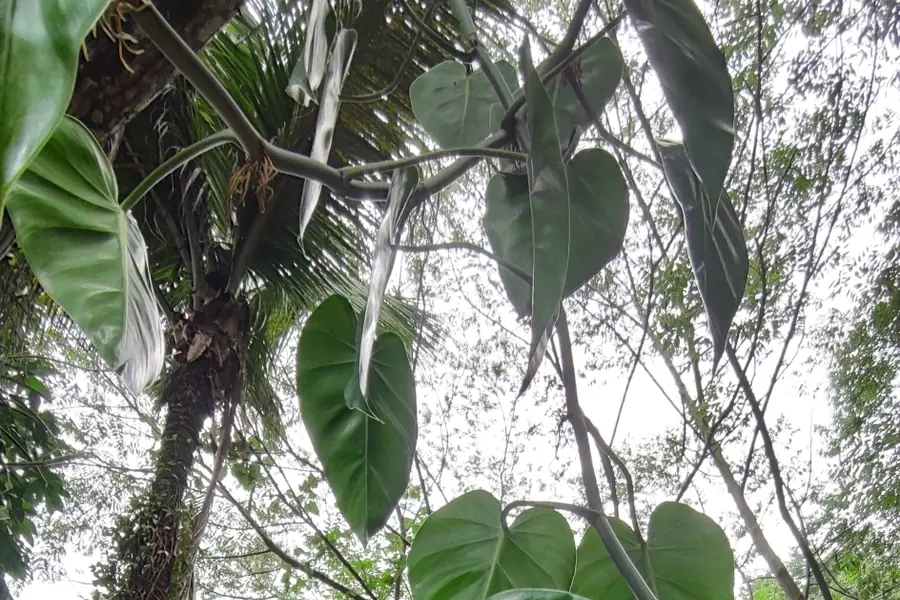
Photo Gilmar R. Ferreira · CC BY-SA 4.0 via Wikimedia Commons
- Family
- Araceae
- Native to
- Tropical rainforest of Central America and the Caribbean
- Mature size
- Vines 4-8 ft indoors
- Toxicity
- Calcium oxalate crystals cause oral burning, drooling and vomiting in cats and dogs. Keep well out of reach.
Heartleaf Philodendron care at a glance
Light
Medium to bright indirect
Tolerates lower light than most trailing plants, though growth slows and vines stretch. Never direct sun, which bleaches the thin leaves.
How to measure light at homeWater
Every 7-10 days
Water when the top inch is dry. Slightly thirstier than pothos, with thinner leaves that wilt sooner.
How to water houseplants properlyHumidity
50%+
Tolerates average humidity but grows lusher above 50%. Responds well to being grouped with other plants.
Temperature
65-80°F (18-27°C)
Keep above 55°F (13°C). Sensitive to cold drafts.
Soil
Light, airy aroid mix
Potting mix with added perlite and a little orchid bark. Good drainage prevents the stem rot this plant is prone to.
Fertiliser
Monthly in spring and summer
Balanced liquid feed at half strength. Skip winter entirely.
Repotting
Every 1-2 years
Fast-growing and quick to fill a pot. Repot in spring, one size up.
How to repot a houseplantPropagation
Water cuttings, very easy
Cut below a node, strip the lowest leaf, and stand in water. Roots in 1-2 weeks.
The heartleaf philodendron is the plant most often mistaken for a pothos, and it is arguably the better of the two: softer leaves, faster growth, a little more tolerance of dim rooms. It has been a standard houseplant for over a century because it is genuinely hard to fail with.
Telling it apart from pothos
They are sold side by side and constantly confused. The reliable differences:
| Feature | Heartleaf philodendron | Pothos |
|---|---|---|
| Leaf texture | Thin, soft, matte | Thick, waxy, glossy |
| Leaf shape | Symmetrical heart | Slightly asymmetric |
| New growth | Emerges from a papery sheath (cataphyll) | Unfurls from the previous leaf |
| Aerial roots | Thin, several per node | One thick nub per node |
| Petiole | Round | Grooved on top |
If you can see a dried papery sheath left behind next to a new leaf, it is a philodendron.
Watering
Water when the top inch of soil is dry: every 7 to 10 days in the growing season, every 10 to 14 in winter.
Because the leaves are thinner than a pothos’s, this plant wilts sooner and more visibly when thirsty. That is a useful signal, but do not lean on it: repeated severe wilting damages fine roots and causes permanent leaf-edge browning.
Water thoroughly until it runs from the drainage holes, and never leave the pot standing in water.
Light
Medium to bright indirect light. It handles dimmer conditions than most trailing plants, but there is a real trade-off:
- Bright indirect: compact, dense growth with large leaves
- Medium: healthy but slower, leaves slightly smaller
- Low: survives, but vines stretch badly and leaves shrink
Keep it out of direct sun entirely, because the thin leaves scorch and bleach faster than a pothos would.
Keeping it full
The default failure mode is not death, it is a plant with four long bare vines and a bald centre. Fix it the same way every year:
- Prune in spring. Cut each vine back by about a third, just above a node. The plant branches from every cut.
- Root the cuttings. Stand them in water for two weeks.
- Plant them back. Tuck the rooted cuttings into the bare middle of the same pot.
- Move it brighter. Stretching is a light problem at heart.
Do this each spring and the plant gets denser every year instead of stringier.
Propagation
Almost as easy as pothos:
- Cut a vine section with at least one node and two or three leaves
- Remove the leaf nearest the cut so the node sits bare
- Stand it in water with the node submerged, leaves above the surface
- Change the water weekly; roots appear in 7-14 days
- Pot into airy mix once roots reach an inch or two
Cuttings can also be rooted directly in damp soil, which skips the water-to-soil transition and often produces sturdier plants. Just keep the mix consistently moist for the first few weeks.
Climbing for bigger leaves
Like its relative the Monstera, a heartleaf philodendron produces larger leaves when it climbs rather than trails. Give it a moss pole or let it grow up a trellis and the difference in leaf size within a year is substantial.
If you prefer the trailing look, that is fine. Just accept the smaller leaves as part of the trade.
Heartleaf Philodendron problems and fixes
| Symptom | Likely cause | What to do |
|---|---|---|
| Long bare vines with widely spaced leaves | Insufficient light | Move to brighter indirect light and prune vines back by a third to force branching. Full guide → |
| Yellow leaves, soil consistently damp | Overwatering | Let the top inch dry between waterings and add perlite to improve drainage. Full guide → |
| Leaves wilting despite moist soil | Stem or root rot | Check the stem base for soft brown areas. Take healthy cuttings immediately as insurance and repot the survivor into fresh dry mix. Full guide → |
| Small new leaves compared with older ones | Light too dim, pot exhausted, or no support to climb | Brighter light, fresh soil and a moss pole all increase leaf size, because philodendrons produce larger leaves as they climb. |
Heartleaf Philodendron FAQs
What is the difference between a heartleaf philodendron and a pothos?
Look at the leaf and the new growth. Philodendron leaves are thinner, softer and matte with a perfectly heart-shaped base, and new leaves emerge from a papery sheath called a cataphyll. Pothos leaves are thicker, waxier and slightly asymmetric, and new leaves unfurl from the previous leaf with no sheath. Philodendron aerial roots are also thinner and appear in clusters.
How often should I water a heartleaf philodendron?
Roughly every 7-10 days in spring and summer, when the top inch of soil has dried out, and every 10-14 days in winter. It is slightly thirstier than pothos because its leaves are thinner, and it will wilt visibly if left too long, though it recovers quickly once watered.
Can a heartleaf philodendron grow in low light?
Yes, better than most trailing plants. It stays healthy in medium and even fairly low light, though the vines stretch, the leaves get smaller and growth slows considerably. For full, densely-leaved vines give it bright indirect light and prune regularly.
How do I stop my philodendron looking stringy?
Prune and replant. Cut each long vine back by about a third, always just above a node, which makes the plant branch from the cut. Root the cuttings in water for two weeks and plant them back into the bare centre of the same pot. Combined with brighter light, this turns a stringy plant into a full one in a single season.
Are philodendrons toxic to cats and dogs?
Yes. All philodendrons contain insoluble calcium oxalate crystals that cause intense burning of the mouth and throat, drooling, pawing at the face and vomiting if chewed. It is rarely fatal but genuinely painful. Because this is a trailing plant that dangles temptingly, place it somewhere a cat truly cannot reach.
Related care guides
Published by Plantive · Published June 28, 2026 · Updated August 16, 2026