
Echeveria Care Guide
Echeveria spp.
Also called Hen and chicks, Mexican snowball, Ghost echeveria
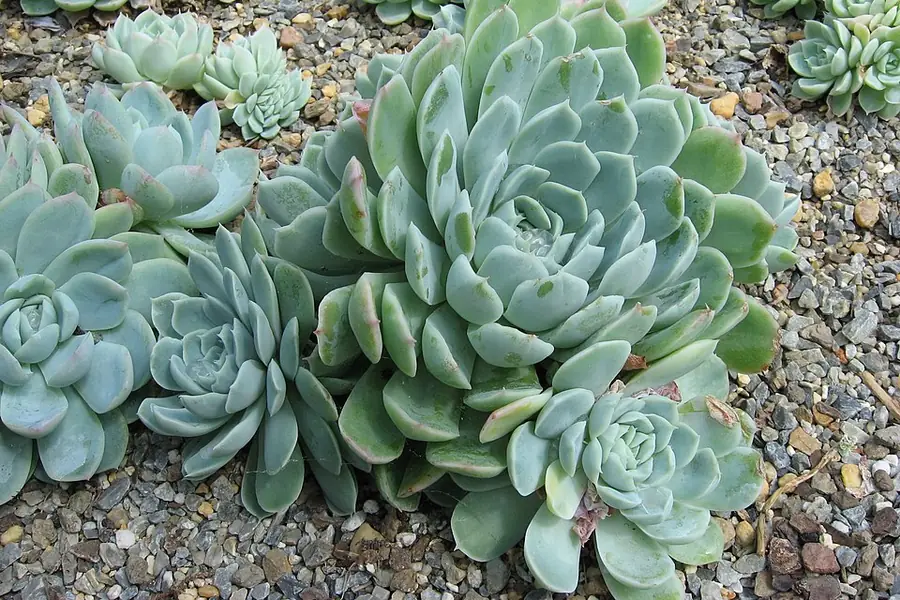
Photo Chhe (talk) · Public domain via Wikimedia Commons
- Family
- Crassulaceae
- Native to
- Semi-desert highlands of Mexico and Central America
- Mature size
- 2-12 in wide rosettes depending on species
- Toxicity
- Non-toxic to cats and dogs. Safe around pets, though chewed leaves may cause mild stomach upset.
Echeveria care at a glance
Light
6+ hours direct sun
The brightest windowsill you own, ideally south-facing. Insufficient light is the number one reason indoor echeverias fail.
How to measure light at homeWater
Every 2-3 weeks
Soak the soil thoroughly, then let it dry out completely. Water the soil, never the rosette, because water trapped between leaves causes rot.
How to water houseplants properlyHumidity
Low, under 40%
Dry air with good ventilation. Humid, still conditions cause fungal spotting and rot.
Temperature
60-80°F (15-27°C)
Protect from frost. Cool, bright winters with sparse watering produce the best colour.
Soil
Gritty cactus mix
Cactus mix cut with 30-50% pumice, perlite or coarse sand. It should barely hold together when damp.
Fertiliser
Twice a year at most
Half-strength succulent feed in spring and midsummer. Over-feeding produces soft, pale, stretched growth.
Repotting
Every 2-3 years
Repot into a shallow terracotta pot barely wider than the rosette. Oversized pots stay wet and cause rot.
How to repot a houseplantPropagation
Leaf pullings and offsets
Twist a whole leaf cleanly from the stem, let it callus for 3-5 days, then rest it on dry mix. Roots and a tiny rosette form in a few weeks.
Echeverias are the rosette succulents that fill Pinterest boards: powder-blue, dusty pink, edged in red. They are easy in the sense that they need very little from you, and difficult in the sense that most homes do not have enough light to keep them looking the way they do in the photographs.
Light is the whole story
An echeveria needs six or more hours of direct sun. Not bright indirect. Direct.
Given that, it stays tight and compact, and produces the pink, purple and blue tones it is grown for. Given less, two things happen:
- It stretches. The stem elongates and the leaves space out, reaching for light. This is called etiolation, and it is permanent. Stretched growth never re-compacts.
- It fades to green. The colours are anthocyanins, stress pigments the plant makes under strong sun. Comfortable plants stop making them.
A south-facing windowsill is the best spot in most homes. If you do not have one, an inexpensive LED grow light on a timer for 10-12 hours a day genuinely solves the problem.
Fixing a stretched rosette
You cannot undo etiolation, but you can restart the plant. This is standard practice and echeverias take it well.
- Cut the rosette off with about an inch of stem attached, using a clean sharp blade.
- Strip the lowest few leaves from that stem, and save them, because they propagate.
- Leave the cutting in open air for three to five days to callus over.
- Set it on dry cactus mix. Roots grow down into the soil within two or three weeks.
- Wait until roots have formed before watering properly.
The original stump usually sprouts several offsets around the cut, so you end up with more plants than you started with.
Watering
Soak thoroughly, then leave it alone until the soil is completely dry: every two to three weeks in the growing season, monthly or less in winter.
Two rules matter more than frequency:
- Water the soil, not the plant. Water pooling in the centre of the rosette rots the crown, and crown rot is usually fatal. Pour at the soil surface, or bottom-water by standing the pot in a shallow tray for 15 minutes.
- Read the leaves. Wrinkled and curling down means thirsty. Translucent, yellow and squishy means overwatered, so stop immediately.
Pot and soil
Shallow terracotta, barely wider than the rosette, with a drainage hole. Terracotta breathes; a snug pot dries out fast; a drainage hole is non-negotiable.
For mix, cut cactus soil with 30-50% pumice, perlite or coarse grit. Damp mix should crumble apart rather than hold a shape when squeezed. Those decorative arrangements sold in glass bowls without drainage are essentially a countdown.
Propagating from leaves
This is the most satisfying thing echeverias do.
- Choose a plump, healthy leaf from low on the rosette.
- Grip it near the stem and twist gently sideways until it pops off cleanly. The whole base must come away, because a leaf torn across will not root.
- Lay it on dry cactus mix, bright light but out of direct sun.
- Leave it for three to five days to callus.
- Mist lightly every few days.
Roots appear in two to three weeks, then a tiny rosette forms at the base. The parent leaf shrivels as the baby consumes it. That is the process working, not a failure. Once the new rosette is thumbnail-sized and rooted, pot it up properly.
Not every leaf takes. Start six and expect four.
Winter
Echeverias slow right down in winter. Water sparingly, since once a month is often plenty, and keep them in the brightest, coolest spot you have. Cool bright winters with lean water actually produce the best colour of the year.
Watch for stretching in the low winter light. If new growth is spacing out, that is the signal to add a grow light rather than wait for spring.
Echeveria problems and fixes
| Symptom | Likely cause | What to do |
|---|---|---|
| Rosette stretching upward with gaps between the leaves | Not enough light, known as etiolation | Move to the sunniest spot available or add a grow light. Stretched growth never recompresses; behead the rosette and re-root the top for a fresh compact plant. Full guide → |
| Lower leaves translucent, yellow and mushy | Overwatering | Stop watering, let the soil dry fully, and repot into grittier mix if it stays damp for more than a week. Full guide → |
| Leaves thin, wrinkled and curling downward | Underwatering | Soak thoroughly until water drains out the bottom. Leaves plump within a week. |
| Colours fading to plain green | Insufficient light | The pinks, purples and blues are stress pigments produced under strong sun. More light restores them in new growth. |
| Black or brown spot at the centre of the rosette | Water sitting in the crown, causing rot | Water the soil only, never over the top. Improve airflow. A rotted crown is usually fatal, so salvage healthy outer leaves for propagation. |
Echeveria FAQs
How often should I water an echeveria?
Every two to three weeks in spring and summer, and as little as once a month in winter, always waiting until the soil is completely dry. Soak thoroughly when you do water, then let it dry out fully again. Water the soil directly rather than pouring over the rosette, because moisture trapped between the leaves causes crown rot.
Why is my succulent stretching out and getting tall?
This is etiolation, and it means not enough light. Echeverias need six or more hours of direct sun to stay compact; in dimmer conditions they elongate the stem and space the leaves out reaching for light. The stretched section will never compress again. The fix is to cut the rosette off with an inch of stem, let it callus for a few days, and re-root it as a fresh compact plant.
Why has my echeveria lost its pink and purple colour?
Those colours are stress pigments, anthocyanins the plant produces to protect itself from strong sun, cold nights and lean soil. In gentle indoor conditions the plant has no reason to make them and reverts to plain green. More direct sun, cooler winter nights and less fertiliser all bring the colour back in new growth.
Can echeverias grow indoors without direct sunlight?
Not well. They survive for a while but stretch, lose colour and become prone to rot as the soil dries more slowly. If your brightest window still is not enough, a simple LED grow light on a timer for 10-12 hours a day is a genuinely effective fix and costs very little to run.
How do I propagate an echeveria from a leaf?
Grip a healthy leaf near the stem and twist gently sideways until it detaches cleanly with its whole base, since a torn leaf will not root. Lay it on dry cactus mix somewhere bright but out of direct sun and leave it for three to five days to callus. Mist lightly every few days. Roots appear within two to three weeks, followed by a tiny rosette, and the original leaf shrivels as it is consumed.
Related care guides
Published by Plantive · Published July 7, 2026 · Updated August 17, 2026